What is the Y chromosome?
Human DNA is a large molecule divided into 23 separate parts called chromosomes, stored in the cell nucleus — rather like data held on several hard drives in a computer. In fact only our sex cells (sperm and eggs) contain 23 chromosomes. When a sperm cell merges with an egg, 23 chromosomes from the mother meet 23 from the father, and the newly formed cell (the zygote), like every cell that develops from it, then has 46. Every cell in the human body apart from eggs and sperm therefore carries two versions of each chromosome — one inherited from the mother, one from the father.
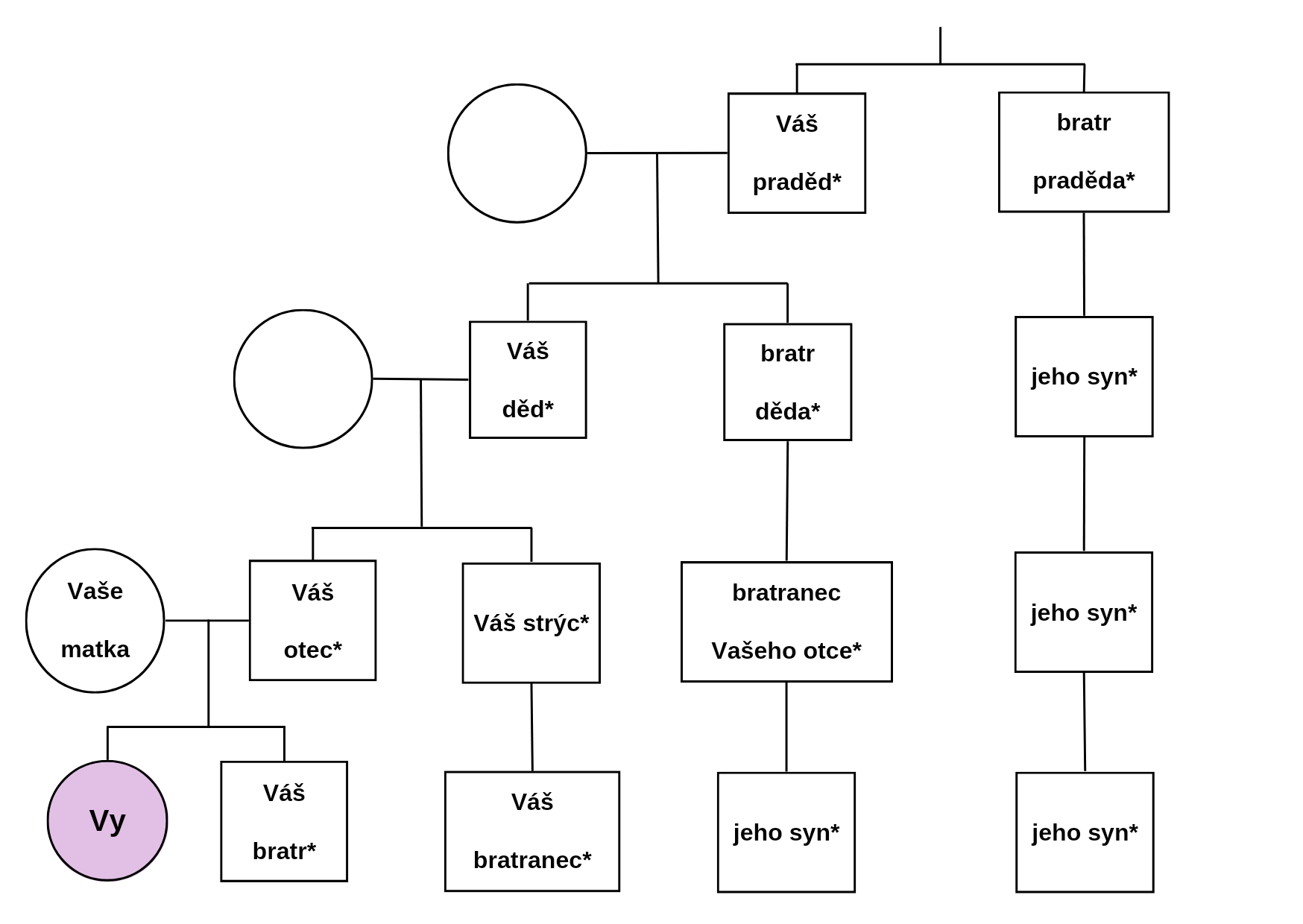
22 of the 23 pairs determine a person's physical and mental characteristics regardless of whether they are male or female. The last pair is called the sex chromosomes, because it determines sex and sexual characteristics. Women have the pair XX (inheriting an X chromosome from both mother and father), men XY (an X from the mother and a Y from the father). The Y chromosome is therefore passed exclusively from father to son, and women cannot inherit it. Across the generations the Y chromosome barely changes — it mutates only about once every 500 years, with no effect on health — which makes it ideal for studying the origin of the paternal line.
The Y chromosome is inherited almost unchanged from one generation to the next, and so carries information about the geographical origin of the paternal line going back thousands of years.